Opens in a new tab

Couples & Marriage Counseling in Boise, Idaho

Two people holding hands against a sunset over the hills

Services / Attachment Therapy

Attachment Therapy in Boise, Idaho

For couples and individuals who keep having the same fight and want to finally understand why.

Most of the couples who find us aren’t necessarily in a crisis.

They’re two capable, hardworking people who love their family and keep landing in the same argument. The topic might change: the kids, the in-laws, phones, work hours, sex, who does what; but the fight underneath it doesn’t.

That fight is almost always about craving a more secure attachment — and a desire to have answers to questions like:

Do I matter to you? Are you actually here with me? Is it safe to need you?

At Tree City Wellness, we help you see the cycle you’re in, get underneath it, and practice something different in the room, so it can hold at home.

Get started today

What is attachment therapy?

Attachment therapy helps you understand how your earliest experiences of love shaped the way you seek closeness, handle conflict, and react under stress as an adult. At Tree City Wellness in Boise, Idaho, we combine attachment science with Emotionally Focused Therapy (EFT) to help couples and individuals change the patterns that keep them stuck and build a more secure bond.

Knowing why you react the way you do is step one… But changing it on a behavioral level, at home, is where the work lies.

A couple walking arm in arm down a quiet forest road

Why do my partner and I fight so much?

Almost every couple walks in to our practice with a desire to have better communication. Yet so often, it’s about what the other person needs to do better…

We’re going to let you in on a little secret: Change within a relationship starts when each person owns their own part in the cycle between them.

The fights couples experience often show up as centering around the kids, in-laws, politics, parenting differences, too much work, too much phone, too much video gaming, wishing your partner were more active, drank less, was more sexual, or was more emotional. However, underneath, there’s usually a need that isn’t being met and no safe way to say it out loud. So it comes out as “you should do this more” or “you never do that.” But then your partner gets defensive, understandably, and now you’re arguing.

Want a place to start with this dilemma?

Why Do We Keep Having the Same Fight?

Get the free guide

Here’s how that looks as a cycle

  1. 01

    “Do I even matter to you?”

  2. 02

    “Why does she always focus on what I do wrong and not what I do right?”

  3. 03

    “He’s getting defensive again. He doesn’t want to change. He’s shutting me out.”

  4. 04

    “I can’t do anything right in this relationship. Why even try?”

…and around again

When you can see yourself in that loop, you can start speaking from what’s underneath it instead of arguing about the dishes, sex, or whatever other topic has popped up recently.

So… what are attachment styles?

Attachment styles are the patterns of relating to others that we develop in childhood, based on how our caregivers responded to our needs as babies and children, and we carry those beliefs into adult relationships. They shape how we show love, handle conflict, and cope with stress. They are typically organized into four categories:

Anxiety about closeness →

High anxiety · Low avoidance

Anxious

You worry about being left or not being enough, and you reach for reassurance.

High anxiety · High avoidance

Disorganized

Often rooted in trauma, you want closeness and fear it at the same time.

Low anxiety · Low avoidance

Secure

You’re comfortable with closeness, can ask for what you need, and trust people to show up.

Low anxiety · High avoidance

Avoidant

You lean on self-reliance, downplay emotion, and pull back when things get intense.

Avoidance of closeness →

Fortunately, these aren’t fixed labels. Knowing your tendencies and triggers gives you a map that you can learn from, and ultimately, change.

How does attachment therapy work at Tree City Wellness?

Though we pride ourselves in offering our clients practical, real-life, tangible tools to enhance their relationship, our primary theory of choice underneath it all is Emotionally Focused Therapy, developed by Dr. Sue Johnson and grounded in attachment science.

What does this look like in action?

  1. We map the cycle.

    We slow the argument down and find what triggers each of you, how each of you protects yourself, and how your protection triggers your partner. You stop fighting each other and start fighting the cycle.

  2. We go to the softer place underneath.

    Blame, anger, and defensiveness are protective emotions. They’re what shows up on the surface. Underneath is usually sadness, loneliness, or fear. Defensiveness may have served you once, but it blocks intimacy, because it keeps your partner from knowing what you really feel and how to support you.

  3. We create a new experience in the room.

    Our therapists are active participants in your growth. We interrupt old patterns, slow you down, and guide you into a conversation you haven’t been able to have at home. You have to feel it work in a safe place before you can repeat it outside of therapy, on your own.

Rapport is the whole game.

A good couples therapist stays objective, helps each person feel seen and valued, and sees the right and the wrong in both partners. If one of you ever feels like we’re “ganging up,” we say so out loud and address it. Once trust is strong, we can be direct: point out patterns, set loving boundaries, and move you toward real and lasting change. We also notice when one of you is flooding or shutting down and support you in getting to what’s underneath in a productive yet gentle way.

We bring nervous system-informed and trauma-informed care to all of it. Your reactions were once survival strategies, and we treat them that way.

Request a consultation

What does attachment therapy look like here?

Our structure is built for momentum.

  1. 75 min

    Joint intake

    Longer and more thorough than a standard first session.

  2. 50 min

    One individual session with each partner

    This is where we get the family history and personal perspective of the problem. We have a no-secrets policy and help you work toward full transparency with each other.

  3. 50 min

    Weekly sessions

    Typically at the same time each week to optimize your potential for progress. If your travel, work, or parenting schedule is demanding, don’t worry, we’ll work with you.

Everything starts with a short online form, then a consultation to match you with the right clinician.

A smiling woman talking with her therapist in a bright room

Attachment therapy for individuals

You also don’t need a partner in the room to work on attachment. Through our relational work with individuals, we work on the fears and beliefs driving how you show up with partners, family, friends, and coworkers.

It’s a good fit if you keep repeating the same relationship pattern, are healing from a difficult childhood, or are getting ready for a relationship where you want things to be different than they have been in the past.

A parent holding a toddler and smiling at the edge of a lake while a second child plays nearby

Attachment and parenting

A lot of our clients grew up without good models of relationships and are determined to give their kids something different. That pull usually gets loudest in parenthood, when a tantrum or a sleepless week sets off old patterns.

We help you repair after ruptures, respond instead of react, and heal your own patterns so you can raise emotionally secure kids. We work with adults and parents to be more regulated, confident, and happy amidst the inevitable stress that comes with being a modern day parent in our society.

How long does attachment therapy take?

We aren’t in this business to keep you here forever.

Most clients are in and out within about six months and feeling better — equipped with tools to handle the ups and downs of marriage or their relationship. Though we cannot promise a certain time-frame, a full year with us in couples work would be a lot. Our focus on this one area of working with couples in our practice, plus our structure, training, and specialization, is why many people notice change early.

We can’t guarantee outcomes, but progress often looks like

  1. Arguments end sooner, and you recover faster
  2. You catch your cycle in the moment
  3. You say what you need without blame and hear your partner without defending
  1. You feel like teammates again
  2. You’re calmer and more present with your kids

Many couples might come back for a tune-up around a big life change, and that’s completely normal.

Meet your attachment-focused therapists

All therapists

We have seven licensed clinicians, all working from a relationship-specialized lens, all supervised and in regular collaboration with each other.

We’re proudly inclusive and affirming of LGBTQIA+ clients, non-monogamous relationships, blended families, and any other relationship structure you choose to engage in for your life.

Todd Jankiewicz, LPC Couples Counselor in Boise

Todd Jankiewicz, LPC

Licensed Therapist

Couples, marriage, pre-marital counseling, divorce, betrayal, parenting, empty-nest, grief & loss, life transitions, connection/intimacy

More info
Katie Perkins, LAMFT Counselor at TreeCity Wellness in Boise

Katie Perkins, LAMFT

Licensed Therapist

Couples, pre-marital therapy, divorce, attachment styles, infidelity, life transitions, depression/anxiety, self-esteem, men’s mental health

More info
Kim Gattiker marriage counselor and couples therapist in boise

Kim Gattiker, LPC

Licensed Therapist

Couples counseling, marriage counseling, infidelity, addiction, divorce, parenting, stress, anxiety, women’s issues, life transitions

More info
Madison Butler Couples Counselor in Boise

Madison Butler, LPC

Licensed Therapist

Marriage Counseling, Marital and Premarital, Trauma, Relationship Issues, Intimacy issues, Divorce, Men’s Issues, Sex-Positive, Kink Allied

More info

Online attachment therapy across Idaho

We operate in person in West Downtown Boise, or by secure telehealth anywhere in Idaho, our only state of licensure at this time.

Frequently asked questions

Still wondering if attachment therapy is right for you? Start here.

Attachment theory explains why we bond and react the way we do. EFT is the structured therapy, built on that science, that helps change those patterns. We use both.

Yes. Attachment styles aren’t fixed labels. Knowing your tendencies and triggers gives you a map that you can learn from, and ultimately, change.

Couples work starts with a joint intake and one individual session with each partner. If your partner isn’t ready, you don’t need them in the room to work on attachment: individual attachment therapy works on the fears and beliefs driving how you show up in your relationships.

Most clients are in and out within about six months and feeling better. We can’t promise a time-frame, but our structure, training, and specialization are why many people notice change early.

Yes. We see clients in person in West Downtown Boise, or by secure telehealth anywhere in Idaho, our only state of licensure at this time.

We’re an out-of-network practice, so we don’t bill insurance directly. Depending on your plan, you may be reimbursed for part of the cost, and many clients use HSA/FSA cards. See Rates & insurance for details.

We work with adults, couples, and parents. Our attachment and parenting work helps you repair after ruptures, respond instead of react, and raise emotionally secure kids.

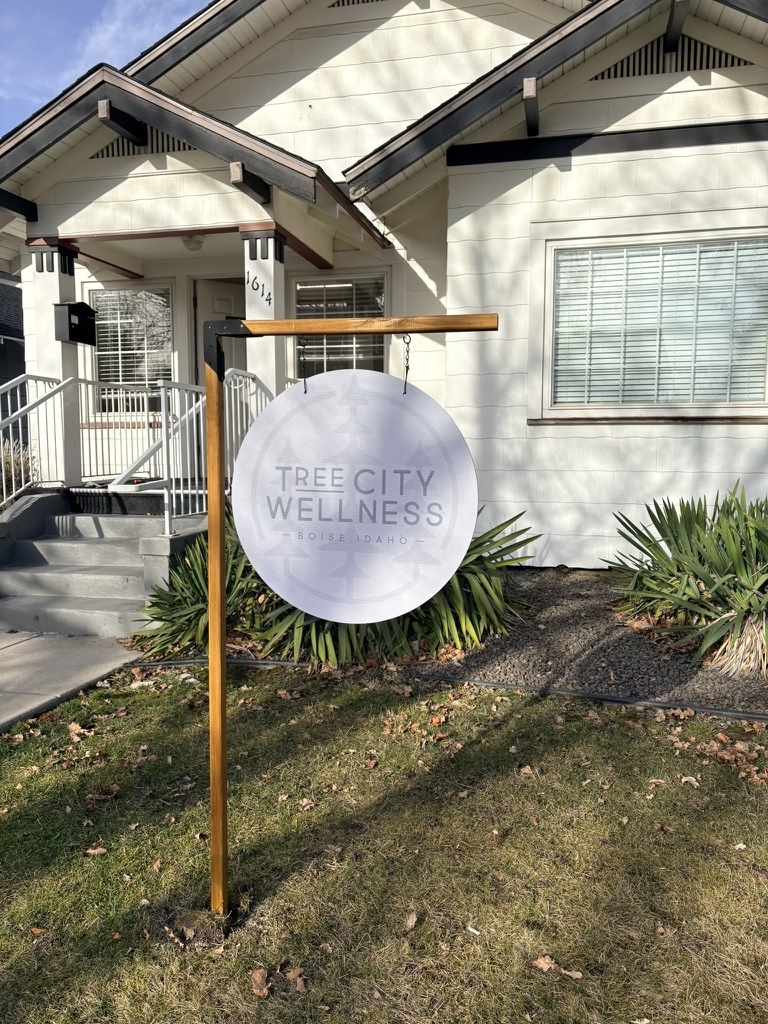
The Tree City Wellness office: a craftsman house with the round Tree City Wellness sign out front

Ready to stop having the same fight?

Start with this short online form and we’ll match you with the right clinician.

"*" indicates required fields

This field is for validation purposes and should be left unchanged.
What brings you here?

or call 208-817-0234